Proposal Business PowerPoint: A Modern Template for Clear, Confident Presentations
In today’s fast-paced business environment, how you present an idea matters as much as the idea itself. Whether you’re pitching a startup to investors, reporting quarterly performance to stakeholders, or outlining a new marketing initiative to your team, clarity, credibility, and visual cohesion are non-negotiable. That’s where Proposal Business PowerPoint stands out—not as another generic deck, but as a thoughtfully structured presentation template built for real-world business communication.
What Makes This Template Different—Beyond Aesthetics
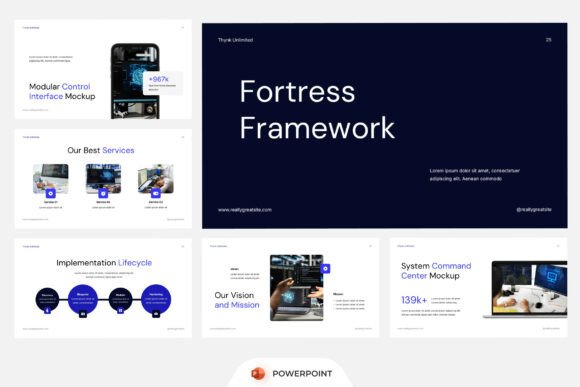
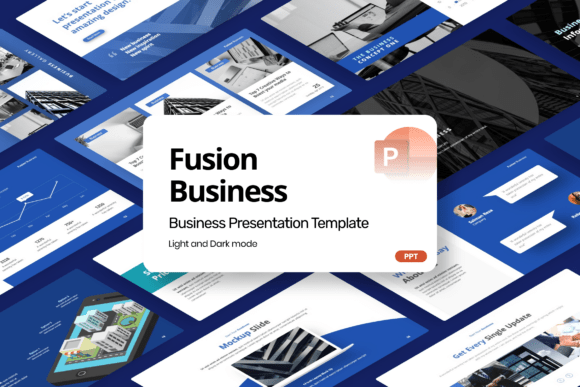
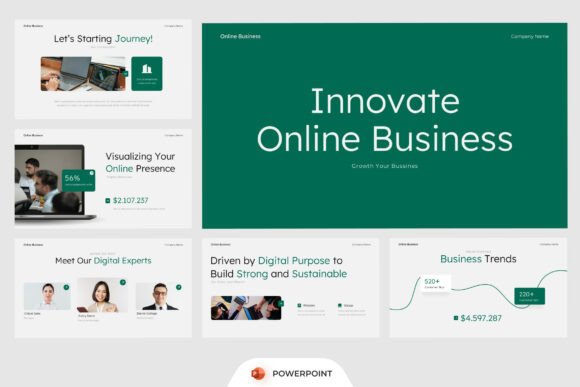
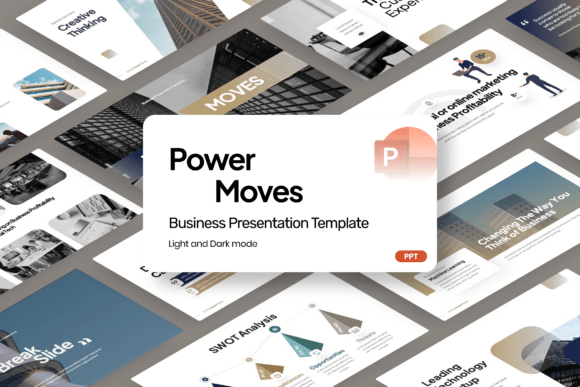
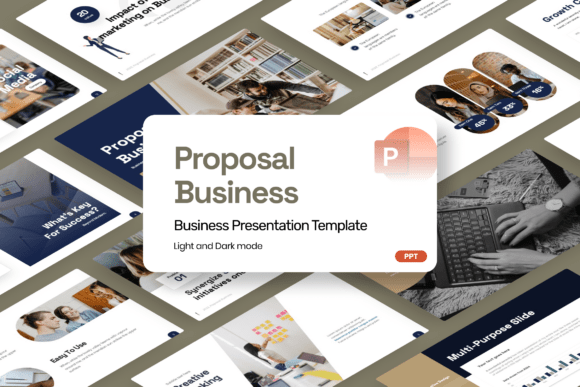
At its core, Proposal Business PowerPoint is a 16:9 widescreen PowerPoint template designed with editorial precision. It goes beyond decorative slides by integrating clean layouts, purpose-built infographic elements, and balanced typography—all editable without design expertise. Unlike templates that prioritize flash over function, this one supports storytelling through structure: dedicated slides for financial summaries, timeline-based project planning, comparative market analysis, and stakeholder-aligned strategy visuals.
Each slide is fully customizable—text, colors, icons, charts, and layout order can be adjusted in seconds. The included help guide walks users through common edits, making it accessible whether you’re a seasoned consultant or a first-time founder preparing for a seed round. And because it ships with a free, licensed font, there’s no risk of rendering issues or licensing headaches when sharing or presenting across devices.
Why Clarity in Presentations Is Now a Strategic Advantage
Modern workflows have reshaped expectations around presentations. Teams collaborate asynchronously across time zones. Decision-makers skim decks before meetings—or skip them entirely in favor of condensed summaries. Investors receive dozens of pitches weekly. In that context, a cluttered, inconsistent, or overly dense slide deck doesn’t just weaken impact—it undermines trust.
Research from presentation usability studies shows that audiences retain up to 40% more information when data is paired with clear visual hierarchy and intentional whitespace. Proposal Business PowerPoint reflects that insight: its editorial compositions avoid visual noise, use consistent spacing and alignment, and separate complex topics into digestible visual units—like modular infographics for KPI tracking or side-by-side scenario comparisons for financial modeling.
This isn’t about “making things pretty.” It’s about reducing cognitive load so your audience focuses on your message—not on deciphering your layout.
Evolving Needs, Evolving Tools
Five years ago, many professionals relied on internal slide libraries or repurposed older templates. Today, those approaches fall short. Remote work has increased reliance on self-contained, shareable files. Hybrid meetings demand slides that read clearly on small laptop screens *and* large conference displays. Meanwhile, generative tools may draft content—but they don’t solve visual coherence, brand alignment, or narrative flow.
Proposal Business PowerPoint bridges that gap. It’s not AI-generated; it’s human-designed for human use cases. Its structure anticipates real moments: the investor asking for a go-to-market timeline, the client requesting a service scope breakdown, the internal team needing a risk-mitigation roadmap. Each section—from executive summary to appendix-ready data slides—is built to serve a functional role, not just fill space.
Practical Use Across Roles and Scenarios
The versatility of Proposal Business PowerPoint lies in its adaptability—not its breadth of clipart. Consider these realistic applications:
- Freelancers and consultants use the proposal slides to outline deliverables, timelines, and pricing tiers—replacing static PDFs with dynamic, branded decks clients can navigate at their own pace.
- Startup founders rely on the pitch deck slides to sequence their story: problem → solution → traction → team → ask—without forcing their narrative into rigid, outdated frameworks.
- Marketing teams customize the campaign strategy slides to layer audience insights, channel plans, and performance benchmarks—turning quarterly reviews into actionable conversations, not status updates.
- Project managers adapt the planning slides to visualize dependencies, resource allocation, and milestone check-ins—helping cross-functional teams stay aligned without constant follow-up emails.
Importantly, none of these uses require design training. Because every element is editable in native PowerPoint—and because image placeholders are clearly labeled—the barrier to professional output drops significantly. You bring the content; the template brings consistency, polish, and structure.
Design Integrity Without Design Overhead
One recurring pain point for non-designers is the trade-off between speed and quality. Drag-and-drop builders promise ease but often sacrifice typographic control or responsive scaling. Custom design services deliver polish but take time and budget most small teams can’t spare.
Proposal Business PowerPoint sidesteps that compromise. Its clean layouts use restrained color palettes, scalable vector-based graphics, and smart text boxes that reflow naturally. Charts are built using native PowerPoint chart tools—so updating numbers automatically refreshes formatting. Icons are embedded as editable shapes, not locked images. Even the slide master maintains logical hierarchy across sections, so changing a header font or accent color applies consistently—not just to one slide, but across the entire deck.
That level of technical intentionality means less time troubleshooting formatting and more time refining messaging—whether you’re tightening your value proposition or stress-testing your financial assumptions.
Realistic Customization, Not Just “Drag-and-Drop”
The package includes PowerPoint files and a concise help guide—not a 50-page manual. That reflects how people actually learn: through targeted, contextual support. Need to swap out a pie chart for a bar graph? The guide shows exactly which placeholder to select and how to paste updated data. Want to adjust the color scheme to match your brand? It explains how to update the theme colors once—and have changes cascade across all slides.
And because stock imagery isn’t bundled (and isn’t needed), users avoid licensing confusion or mismatched visual tone. Instead, the template provides thoughtful, neutral placeholders—giving you room to insert your own photos, product screenshots, or authentic team imagery. That encourages authenticity over generic filler.
Where This Fits in Today’s Professional Landscape
There’s growing recognition that presentation literacy is a core professional skill—not just for executives, but for engineers explaining system architecture, educators delivering curriculum proposals, or nonprofit leads seeking grant funding. Platforms like Canva have raised awareness of visual communication, but they often lack the nuance required for complex business narratives.
Proposal Business PowerPoint meets professionals where they are: working in PowerPoint (still the dominant enterprise standard), needing reliability over novelty, and valuing efficiency without sacrificing authority. It doesn’t try to replace strategic thinking—it removes friction so that thinking can shine through.
It’s also aligned with broader shifts toward asynchronous collaboration and documentation-as-communication. A well-structured, self-explanatory deck can replace multiple meetings, onboard new stakeholders faster, and serve as a living reference—not just a one-time artifact.
A Tool That Grows With Your Work
Templates shouldn’t lock you in. Proposal Business PowerPoint is built to scale with your needs: add slides, delete sections, reorder sequences, or combine layouts from different modules. The financial report slides integrate cleanly with the marketing strategy slides when building a growth plan. The startup pitch flow transitions smoothly into an implementation roadmap for post-funding execution.
That flexibility means it stays relevant—not just for your next presentation, but for the ones six months or two years down the line. As your role evolves, so does your ability to leverage the same foundation in new ways.
In a world where attention is scarce and credibility is earned through consistency and clarity, having a reliable, professional-grade presentation foundation isn’t a luxury. It’s practical infrastructure—for your ideas, your reputation, and the outcomes you’re working to achieve.